
Reader wants to know what is playing near them
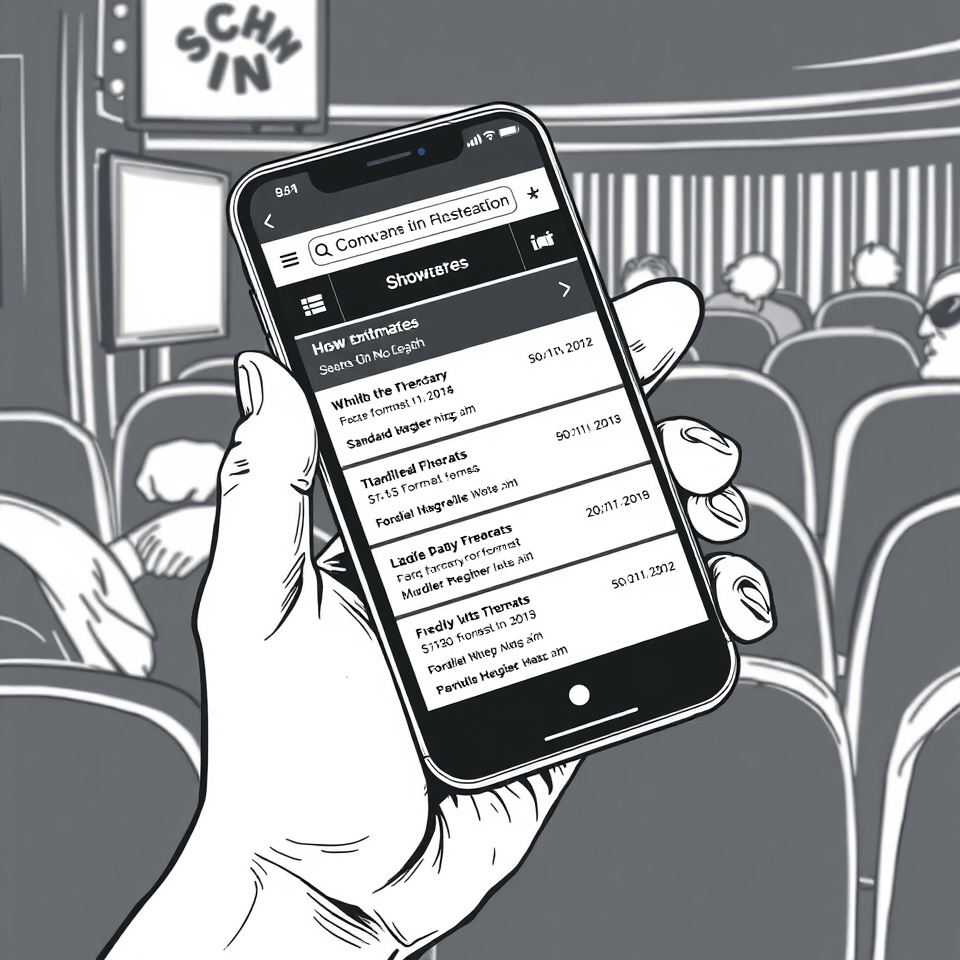
Anyone typing "movies in theaters" into a search bar is really asking a narrower question: what's playing close enough to actually go see tonight or this weekend. That question has a fixed path, and it works the same way whether the venue is a national chain or a single-screen house downtown, and it works the same way whether the city is a major metro or a smaller market like Yakima, Washington.
Start with location, not the title list. A ZIP code, city name, or a specific theater picked from a map is what turns a generic national slate into a usable one — a search for showtimes in Omaha's 68138 ZIP code, for instance, returns a specific set of nearby theaters and their current bookings, not every film currently in release nationwide, as shown in Moviefone's Omaha listings. For a smaller market like Yakima, the same mechanism applies: a chain site or aggregator's location search, run against that city's name or ZIP code, returns whichever theaters actually serve that area and what each one has booked this week — there is no separate "Yakima list," only the same national inventory filtered down to what's local. Chain sites like Cinemark and Mann Theatres work the same way — the "now playing" grid only becomes meaningful once it's filtered to a location, because inventory varies theater to theater even within the same city.
Once a location is set, the listing returns titles paired with rating, genre tags, and available formats — standard, 3D, or a premium large-format screen — specific to that venue, as seen on a single-location page like Showcase Cinema de Lux North Attleboro's. From there the reader picks an actual showtime — a specific date and hour — and moves to reserved seating: most theaters assign seats to a specific auditorium and showtime, so the seat map a reader sees at checkout is tied to that exact screening, not the theater in general, and it can look different for the 4pm show than the 7pm show in a different auditorium of the same film. Skipping straight to a title list without picking a location first is the most common way people end up confused about why a film "in theaters" doesn't seem to be playing anywhere nearby; the location step isn't optional, it's the filter that makes the rest of the listing correct.
What's actually topping the current slate
"Top 10" gets used loosely, and it's worth separating what a reader means before trusting any single list. A title's presence near the top of a popularity-sorted browse page, such as Rotten Tomatoes' now-playing browse, reflects how much attention and audience interest a film is drawing across theaters currently, not necessarily its box office rank for a given weekend or its critic score — those are three different sortings that happen to overlap often but not always.
A workable way to build a personal top 10 for the week is to combine two things: which titles are booked at the most nearby theaters (checkable on a chain's current listing, like Cinemark's movies page), and which of those are drawing the most attention nationally on a popularity-sorted browse page. A film with heavy nearby bookings and high popularity ranking is the safe default pick if the goal is simply "what's the movie to see this week" rather than a specific title already in mind.
Reader asks "what is the #1 movie right now?"
"Number one" has two legitimate answers, and they measure different things. One is box office rank — which film sold the most tickets over a weekend, expressed in dollars grossed across a theater count. The other is critic rank — which film reviewed best, typically expressed as an aggregate score built from a large sample of reviews.
These numbers move independently and often disagree. A wide-release franchise sequel can top the weekend box office while sitting well below a limited-release drama on a critic aggregate; the reverse happens too, when a small film with strong reviews barely registers in ticket sales because it's booked into far fewer theaters. Rotten Tomatoes' now-playing browse page sorts by popularity and separately displays critic scores per title, which is the clearest way to see the split side by side rather than assuming one number stands for both.
So the practical move is to decide which question is actually being asked before looking for an answer:
| Ranking | What it measures | What it tells you |
|---|---|---|
| Box office rank | Ticket revenue over a weekend, by theater count | What most people are choosing to see |
| Critic score | Aggregate of published reviews | What reviewed best, independent of turnout |
A reader who wants the event everyone's talking about should look at box office rank. A reader who wants the strongest film regardless of crowd size should look at the critic aggregate. Both questions get called "what's the #1 movie" — but only one answer is right for a given reader's actual intent.
A title appears under "coming soon" with a release date
A film listed as "coming soon" carries a specific release date, and on that date it moves into the current now-playing slate at theaters that booked it. That's the entire mechanism — there's no separate announcement, the title simply shifts from one list to the other once its date arrives, as tracked on chain pages like Cinemark's movies listing.
What isn't obvious is what happens after that first weekend. As weeks pass, a film's showtime count at any given theater shrinks — fewer screens, fewer times per day — until eventually a location drops it from the schedule entirely, even though the film may still be nominally "in theaters" somewhere in the country. This is why a title can appear on a national "now playing" list while having zero actual showtimes at a theater a few miles from a specific reader, or anywhere in a smaller market like Yakima, even while it's still booked heavily in larger cities. National release status and local booking status are two different facts, and only one of them answers "can I actually go see this today."
The fix is simple: check showtimes at the theater level, not the title list at the national level. A theater's own page — whether that's a single-location listing like Emagine Royal Oak's or a chain's location-filtered grid — shows what's actually bookable there this week. If a title has no times listed at any nearby theater, it's effectively unavailable locally regardless of what a general "in theaters" list says, and the honest next step is to widen the search radius rather than assume the film will show up eventually.
Reader is choosing a screening for a specific group
Picking a showtime for a specific audience — a family with young kids, someone who only wants to see action on the biggest screen available — comes down to layering two filters in order rather than browsing the full slate.
- Filter by rating first. MPA ratings (G, PG, PG-13, R) and the accompanying reason line describe content, not quality, and they're the fastest way to rule out titles unsuitable for a given group before looking at anything else.
- Filter by genre next. Family, animation, action, horror — genre tags on listing pages narrow the remaining titles to what actually fits the outing.
- Filter by format and seating. Premium large-format screens, standard 2D, and reserved seating are per-theater attributes, meaning the same film might be available in a premium format at one location and only standard at another — worth checking on the specific theater's page, such as Mann Theatres' browse listing, before assuming a bigger screen is available nearby. Reserved seating itself is tied to the specific showtime chosen, not the film in general: the seat map at checkout reflects that auditorium's layout and which seats are already taken for that exact date and time, which is why the same film at the same theater can show open seats at one hour and a nearly full map an hour later.
- Book the showtime that satisfies both. Once rating and genre narrow the title, and format and seating narrow the venue, the remaining showtime is the one to reserve.
Ticket price and any discount days vary by theater and by format upgrade — a premium-format ticket typically costs more than a standard screening at the same location — so it's worth checking the theater's own pricing before assuming a listed showtime and its cost.
Showtime
A showtime is the atomic unit underneath all of this: one specific film, at one specific theater, at one dated and timed screening. Every listing on a chain site or a single theater's page is ultimately a collection of these — which is why checking at the showtime level, not the title level, is what actually confirms a film is playable this week at a location a reader can get to.
To find one, pick a nearby theater, open its current schedule, and look for the title, date, and time together — not just the title's presence on a national list.